AI engineering · e-commerce / funnel
Generative sales-funnel engine — from market research to payment, AI-driven
INFRASTRUCTURE DEPLOYED · payment verified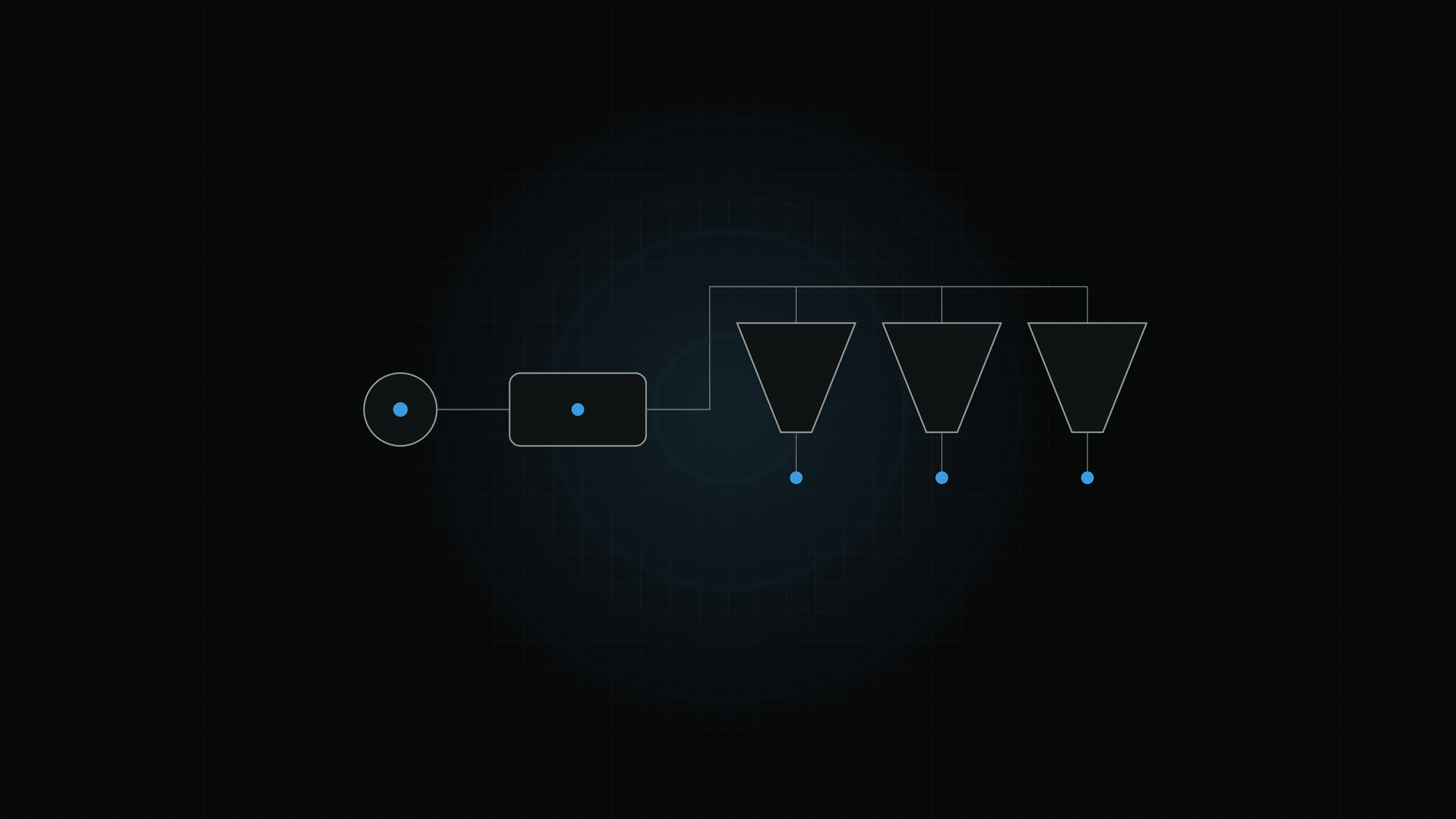
Context
An AI e-commerce engineering project, presented strictly anonymously: neither the market theme, nor the products, nor the deployment address is disclosed. What is demonstrated is the infrastructure and its orchestration — the ability to generate, validate, and deploy a complete sales funnel, not any particular catalog.
Problem
Building a funnel that converts normally takes weeks: market research, segment definition, offer design, page copy, visual creation, payment integration, deployment. Redoing all of that for each new market does not scale. The goal: a single engine able to produce this infrastructure on demand, grounded (no hallucination), and directly deployable and transactional.
Approach
End-to-end multi-agent orchestration: deterministic wherever possible, grounded AI where creation is needed. Every step — market research, personas, offers, angles, creatives, funnels — is a link that writes its outputs to a SQL database, so the final funnel is never improvised: it is assembled from data validated upstream. Generation is grounded on a knowledge base (homemade RAG) and constrained by JSON schemas to forbid invention.
What was delivered
- Multi-agent orchestration: market research → personas (micro-segments) → offer catalog → marketing angles → creatives → complete funnels (sales page, order bumps, 1-click upsell, thank-you page, email sequence) — each step feeds a SQL database.
- Homemade RAG: a knowledge base ingested in multiple formats (PDF, DOCX, HTML, Markdown), a retriever weighted by keyword and domain, token-budget packing and citable blocks — grounded generation, source traceability, zero invention; architecture ready for pgvector.
- Validated structured outputs: every deliverable is produced as JSON constrained by JSON Schema (ajv, two passes), then a conformity linter BLOCKS deployment if a forbidden term appears — with negation handling.
- Data-driven Next.js app: one codebase generates N funnels from configuration alone, with static rendering of the /f/[slug] pages.
- Stripe payment: Checkout with order bumps and one-click upsell, verified by a real end-to-end test purchase — signed webhook → sale recorded in the database.
- Automated deployment through the Vercel API: project creation, encrypted environment variables, upload, then waiting for the READY state.
- Multi-market, multi-language, and multi-currency: the engine is independent of the input theme.
Stack
- Next.js 14
- React 18
- Stripe 16 (Checkout, order bumps, one-click upsell)
- Supabase / PostgreSQL (RLS)
- Node ESM
- ajv (JSON Schema, 2 passes)
- pdf-parse / mammoth / cheerio / turndown (RAG ingestion)
- Vercel API (automated deployment)
Observed results
A multi-agent system that produces a complete sales infrastructure — offers, pages, creatives, funnels — from a single input theme.
engine architecture · demonstrated capability
Generation 100% grounded on a knowledge base and schema-validated: zero hallucination, outputs blocked at deployment if a forbidden term appears.
homemade RAG + JSON Schema (ajv) + conformity linter
End-to-end payment verified by a real test transaction: signed Stripe webhook → sale recorded in the database.
Stripe test purchase (test mode) · webhook → database
One codebase, N funnels: the infrastructure is replicable on any sector by changing only the input data.
data-driven Next.js app deployed on Vercel
What stays human
The AI generates, grounds, and validates; the human decides what goes live. All generation is bounded by schemas and a conformity linter that block a non-conforming output before deployment. The project is presented as a deployed and verified sales-and-payment infrastructure — never as a revenue-generating business. Out of respect for confidentiality, the market theme, the real URLs, and the identity of the owner are not disclosed.